
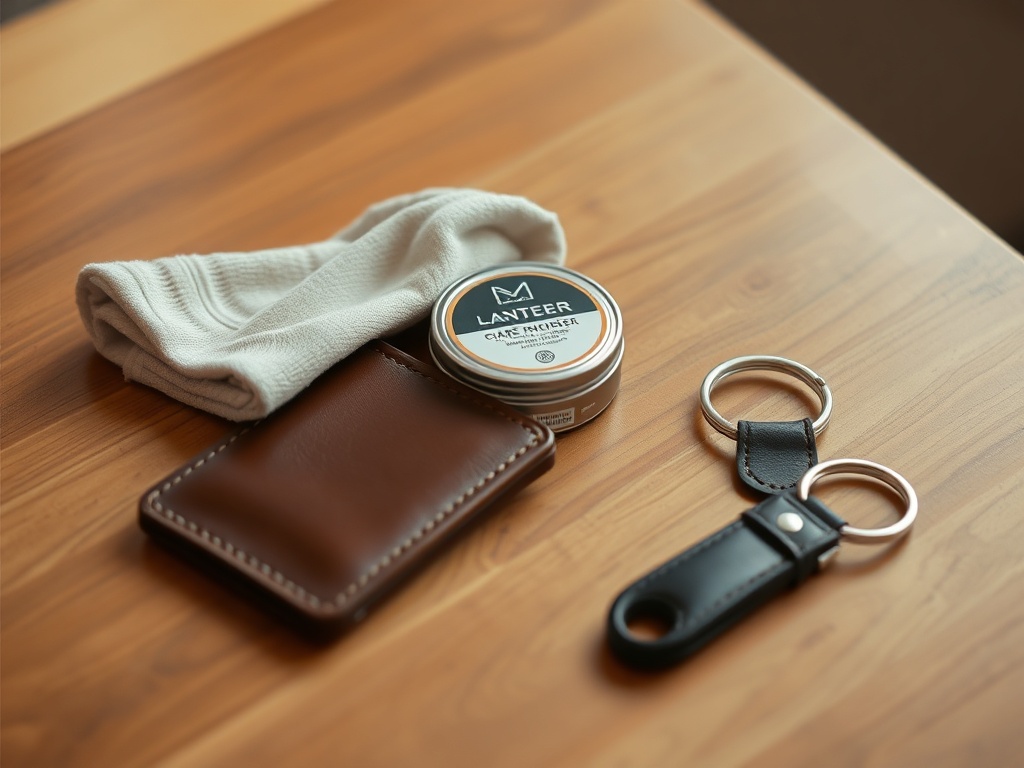
Full-grain leather is not a “set it and forget it” material, but it does not ask for much either. A little attention every few months is usually enough to keep a piece supple and let it develop the kind of patina that makes leather look better with age rather than worse. This guide covers the basics: cleaning, conditioning, water, and the wear that is normal rather than a problem.
Why full-grain leather changes over time
Full-grain leather is the top layer of the hide, left with its natural grain intact rather than sanded smooth. That surface absorbs oils from your hands, reacts to light, and softens with handling — which is why a wallet or keychain carried daily looks different a year in than it did the day it arrived. This is called patina, and on genuine full-grain leather it is a sign the material is doing exactly what it is supposed to do. Bonded or heavily coated leathers cannot patina the same way; they crack or peel instead.
Everyday cleaning
Most of what a leather piece needs is simply a dry or barely-damp soft cloth, wiped in the direction of the grain. For dust or light surface dirt, that is the whole routine. Avoid baby wipes, disinfectant wipes, and household cleaning sprays — they often contain alcohol or ammonia, which strip the natural oils out of the hide and leave it dry and prone to cracking. If a spot needs more than a dry wipe, a cloth dampened with plain water and wrung out well is usually enough; let the leather air dry away from direct heat afterward.
Conditioning: how often and how much
A leather conditioner or balm replaces the oils that handling and time gradually draw out. For a piece carried daily — a wallet, a card holder, a keychain — conditioning two to four times a year is a reasonable rhythm; less-handled pieces like a passport cover need it less often. Use a small amount, worked in with a soft cloth in small circular motions, and let it absorb for a few minutes before wiping away any excess. More is not better here: over-conditioning can darken leather more than intended or leave it feeling greasy. Test any new product on a small hidden area first.
What to do about water
A little rain will not ruin full-grain leather. If a piece gets wet, blot it gently with a dry cloth — do not rub, which can push moisture further into the grain — and let it air dry naturally, away from a radiator, heater vent, or direct sun. Fast, direct heat is what causes leather to stiffen or crack, not the water itself. Once fully dry, a light conditioning helps restore any oils lost in the drying process. Standing water or a heavy soak is the one thing worth actively avoiding; brief exposure is normal wear.
What normal wear looks like
Corner rounding, a softened crease where a wallet folds, small marks from keys or a bag — these are the ordinary signs of a piece being used the way it was made to be used, not damage. A debossed Bible verse will not fade or lift, since it is pressed into the grain rather than printed on the surface; the surrounding leather darkening around it over time is part of what makes each piece feel more personal the longer it is carried.
Storage between uses
For a piece that is not carried daily — a passport cover between trips, a luggage tag off-season — store it somewhere dry and out of direct sunlight, which can dry leather out or shift its tone unevenly. A drawer or a fabric pouch works well; avoid sealed plastic bags for long stretches, since leather needs to breathe.
Common questions about caring for full-grain leather
How often should I condition full-grain leather?
Two to four times a year is a good rhythm for a piece carried daily, like a wallet or keychain. Pieces used less often, such as a passport cover, need conditioning less frequently — watch for the leather feeling dry or stiff as the signal it is time.
Will my leather gift darken or change color?
Yes, and that is expected. Full-grain leather absorbs natural oils from handling and reacts to light, gradually deepening in tone — this is patina, not damage. A debossed verse stays legible since it is pressed into the grain rather than printed on the surface.
What should I avoid using on leather?
Avoid alcohol-based wipes, household cleaning sprays, and direct heat sources like radiators or hair dryers, all of which dry out or crack the hide. A soft cloth for everyday cleaning and a proper leather conditioner a few times a year is all most pieces need.
If you are choosing a new gift and want to understand what makes leather grades different in the first place, our guide to full-grain leather vs genuine leather covers that in plain terms. Browse everyday leather gifts made from the same full-grain cowhide described here.
For the bigger picture, see our overview of full-grain leather — what it is, how it ages, and how to care for it.
Get the verse of the day by email
One King James verse each morning — free, nothing to install. Unsubscribe anytime.
We only use your email for the daily verse. No spam, no sharing.